Showing posts with label why we do what we do. Show all posts

15.5.09

(Our) Life Inc.

Life Inc. The Movie from Douglas Rushkoff on Vimeo.

It is with some regret that I admit, I've had a galley copy of Douglas Rushkoff's new book Life Inc.: How the World Became a Corporation and How to Take It Back which I have been unable to devote enough attention. Between medical issues and my wedding, I just haven't had the time to sit and read much. Hopefully I can squeeze out a review before the book hits store shelves in just under two weeks (Sorry, Douglas, I really appreciate the advance copy and hope this doesn't negate my chances for advances of future publications). Everyone can read Chapter One here courtesy of BoingBoing, where Rushkoff has been guest blogger this week.

For the time being, I highly recommend Life Inc The Movie (above), which sets up the book's premise. In light of the current economic woes worldwide, I think it is crucial to examine the path that got us here: corporatism. You may be surprised to learn how it all began, and even more surprised to discover how much corporatism has become ingrained in the way we behave. Pre-order Life Inc. on Amazon.

UPDATE:
Great continuation of the conversation, with more excerpts from the book, here at BoingBoing: Everything's Open Source but Money.

29.5.08

Out of Optimism, or Not?

"I am not a pessimist; to perceive evil where it exists is, in my opinion, a form of optimism." - Roberto Rossellini
Most people assume I'm a pessimist. Maybe you've come to the same conclusion after reading a few choice posts on this little blog of mine. I've been called a pessimist to my face more times than I care to count, by friends, associates and even mere acquaintances. I like to counter them by claiming that my level of optimism is such that I'm disappointed in my fellow man for not knowing better, having more common sense, behaving more responsibly, being more respectful of others, and so on. I don't think I'm either one of these -isms, though I can admit that I swing toward the side of pessimism. So what.

The way I see it, the total optimist creates unreasonably high expectations, inevitably leaving people unpleasantly surprised by the facts of reality. The pessimist, on the other hand, creates reasonably low expectations, which leave people pleasantly surprised when reality turns out better than originally expected. I'm more interested in coping and understanding the nature of things than I am in pretending and ignoring it. Not saying it's right for everyone, but it feels right for me.
"Optimism is the madness of insisting that all is well when we are miserable." - Voltaire
You know what makes me feel even more pessimistic? People who assume that pessimism (read: realism) is a bad thing. Not long ago I was asked - by someone I thought knew me better - to be an endless fountain of optimism. Spraying anyone nearby with a sticky-sweet outlook on an imaginary world where none of us really live. Rose-tinted glasses, even when I have perfect vision? All I can say is that I'll try; I'm not an optimistic person, and the very fabric of my personality is unlikely to do a complete U-turn. Only an optimist would think that possible, right?
"Optimism: The doctrine that everything is beautiful, including what is ugly, everything good, especially the bad, and everything right that is wrong... It is hereditary, but fortunately not contagious." - Ambrose Bierce
If you're the type who has always experienced an optimistic world, I can understand why you're stuck there. It's a safe place to hide from reality. Pessimism works the same way. But, practically speaking, the pessimists may be more likely to survive in the long run. For example, see Dumb Little Man's 8 Reasons Why You Shouldn't Always Be An Optimist.
"Pessimism, when you get used to it, is just as agreeable as optimism." - Arnold Bennett
Do you think Dumb Little Man is a pessimist for posting that information? Or is he optimistic in the sense that he can help his fellow man lead a more fulfilling life through the sharing of this information? Post a comment and let me (and my handful of readers) know. Thanks.

3.4.08

Will Power*

* While supplies last.

According to this New York Times article, we each have a limited supply of will power.
The brain’s store of willpower is depleted when people control their thoughts, feelings or impulses, or when they modify their behavior in pursuit of goals. Psychologist Roy Baumeister and others have found that people who successfully accomplish one task requiring self-control are less persistent on a second, seemingly unrelated task.
So, bolstering your will power on one initiative can deplete your will power on another, however unrelated. Perhaps this, combined with certain other factors, explains why I have such a hard time quitting smoking or drinking less while continuing to work in advertising. Or why I have less patience with the demands of my workplace when it's necessary to turn attention to my mental and physical health. Over time, this reallocation of will power is supposed to help give us more will power... at least, that's what the article suggests:
The good news, however, is that practice increases willpower capacity, so that in the long run, buying less now may improve our ability to achieve future goals — like losing those 10 pounds we gained when we weren’t out shopping.
I think this is fascinating and at the same time a little concerning. Have you noticed yourself slipping in one area while concentrating on another, in terms of will power? How do you compensate for any depletion of will power you might notice in yourself?

[NYT link via Kottke]

8.3.08

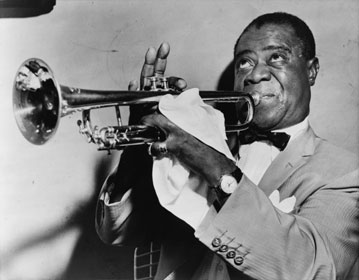
Jazz Brain Isn't Just For Jazz


Nevermind that I keep biting BoingBoing posts. As a hobbyist musician who enjoys improvising when performing live, I find this very interesting.

The scientists found that a region of the brain known as the dorsolateral prefrontal cortex, a broad portion of the front of the brain that extends to the sides, showed a slowdown in activity during improvisation. This area has been linked to planned actions and self-censoring, such as carefully deciding what words you might say at a job interview. Shutting down this area could lead to lowered inhibitions.

The researchers also saw increased activity in the medial prefrontal cortex, which sits in the center of the brain’s frontal lobe. This area has been linked with self-expression and activities that convey individuality, such as telling a story about yourself.

“Jazz is often described as being an extremely individualistic art form. You can figure out which jazz musician is playing because one person’s improvisation sounds only like him or her,” says Limb [that's Charles J. Limb, one of the researchers]. “What we think is happening is when you’re telling your own musical story, you’re shutting down impulses that might impede the flow of novel ideas.”

Limb notes that this type of brain activity may also be present during other types of improvisational behavior that are integral parts of life for artists and non-artists alike. For example, he notes, people are continually improvising words in conversations and improvising solutions to problems on the spot. “Without this type of creativity, humans wouldn’t have advanced as a species. It’s an integral part of who we are,” Limb says.

That might help explain some of my behavior when not playing music, too. (Yes, I am suggesting that I may have an over-active prefrontal cortex. Those of you you know me know the kinds of things I say without thinking.)

[Pic via Musilosophy]

2.3.08

Sibling Site Updates Q1 08

Between recent events, having work to do at home over the weekend, and a business trip to London that starts in two days, I felt like I needed to get grounded in something that wasn't work related ... and do it in a hurry. Publishing a new web site can give one a sense of accomplishment. Two sites, even better. So I finished some updates I've been putting off to pylbug.com, particularly to my (almost) complete discography.


And then I posted two new mashes-up to Noise Throng:

This one I've been toying with, on-and-off, for a while...

Pour Some Witness On Me
[Roots Manuva vs. Def Leppard]


And this one I whipped up over the course of a few evenings this past week...

Run With The Devil
[Van Halen vs. Gnarls Barkley]


Boredom is a provocation.

I think I've been bored my whole life. I used to complain about being bored to my mom. Chronically, hopelessly bored. All the time. She would reply with a simple correction: "No, you're boring."

Around the same time I left home for good, I started experimenting more regularly in the recording arts. It was, in the beginning, something I did to alleviate the boredom. Coincidentally or not, it was around then I started becoming a fan of The Boredoms. [Have you heard them lately? They're playing in-the-round at Congress Theater in a few weeks. You should try to go.] They're not boring. They're not the main reason for this post, either.

Boredom is. In fact, I'm wondering if boredom isn't actually one of my more productive states. If necessity is the mother of invention, as they have always said. Anyway...

Today, I caught up with some bookmarks I've been meaning to read into further. One was about a term that caught my eye about a month ago - Strategic Boredom. You should watch this video about it. It's not boring. At least for most of you regular commenters, it won't be boring. But it is a bit nerdy. And you're gonna need about twenty-eight minutes to get through it. Enjoy... unless you've got something better to do.


29.2.08

Status Skills, Obsolete Or Not

The notion of status skills isn't exactly new. As Trendwatching's report stated in September of 2006:

"In economies that increasingly depend on (and thus value) creative thinking and acting, well-known status symbols tied to owning and consuming goods and services will find worthy competition from 'STATUS SKILLS': those skills that consumers are mastering to make the most of those same goods and services, bringing them status by being good at something, and the story telling that comes with it."

When I first read that, I interpreted it as a growing, collective desire to acquire new skills. But after reading this Kottke post, I'm revising that original interpretation to include any skill, new or old... er, obsolete. I feel compelled to, because I may know more of these obsolete skills than I do these.

23.1.08

Half-Assed Regulations Ultimately Don't Save Us

I've been balking for months at the ridiculous television ads for the Smoke-Free Illinois Act (formerly the Illinois Clean Indoor Air Act) that promise "air free of cancer-causing toxins" when the only difference in the air is a lack of cigarette smoke. There are still other toxins in the air, and plenty of other ways to get cancer other than from those airborne toxins. Cancer aside, think of all the other irritants polluting our indoor air: wearers of too much cologne, bearers of body odor (ranging from homeless dude to indie rocker in severity), and pet owners who transmit pet dander (allergens) on their skin, hair and clothing. Is our legislature sincerely trying to improve air quality, or just pretending to save people from their beloved vices? Take a guess.

In Illinois, 71.82% of us believe that smoking a pack or more a day poses a significant health risk. Only 38.75% of us believe there is a significant risk in the consumption of five or more alcoholic drinks, once or twice a week. Roughly .2% of deaths in Illinois are caused by cancer. But 45% of traffic fatalities are alcohol-related. Why haven't we outlawed alcohol from public places? Or automobiles? We need to be saved from booze and cars more than we need to be saved from cancer or cigarettes.

Today I'm snickering at New York City's new menu labeling regulations, which claim to help guide consumers to healthier choices - by displaying only caloric information. What about fat, sodium and cholesterol? Sure, 20% of New Yorkers are obese, but 25.3% of them have high blood pressure and 34.9% of them have high cholesterol. If health were the true priority, the labeling wouldn't begin and end with calories alone.

And since when is it the restaurant's job to teach the ignorant masses how to eat properly? Why aren't grocery stores tasked with educating us more? Wait, what about schools - they're supposed to have educated us already, right? Oh, and our parents... we learn our eating habits from our parents more than anyone else. You need a license to drive a car and you have to be 21 to purchase alcohol, but any dumb-ass can have kids and instill unhealthy habits in them.

Why do we feel the need to demonize a fashionable bad guy instead of address the real problems in their entirety? Why does legislature feel the need to save us from ourselves only when convenient? And why do I think that one of my blog readers is going to have the answers to these questions?

Today is just one of those days, I guess.
UPDATE: DC Lies has the answer.

2.12.07

The secrets that you keep, when you're meeting in your sleep.


Went to some management training for two and a half days this past week. It was a lot to take in, but most of that should prove useful. I've already noticed some changes taking effect. My fiancee tells me for the past few nights I've been talking a lot in my sleep.

Not just talking, though. She says it sounds like I'm giving a presentation. Or maybe speaking in a meeting. I just wake up tired. Can't remember any meetings, but it sounds as though they may have been productive. I'm told that it sounded as though I was doing a convincing job of it - whatever it was.

[Video via Kottke]

7.6.07

Forgetting To Remember

NYT's Forgetting May Be Part of the Process of Remembering cites a report in the journal Nature Neuroscience. Basically, maintaining cognitive control demands that we forget things, much in the same respect it demands that we remember certain other things. Two sides of the same coin, when you think about it. Or, as the report phrases it:

"Remembering often requires the selection of goal-relevant memories in the face of competition from irrelevant memories."

So, in order to remember to get your proverbial shit together, you may inadvertently force yourself to forget some irrelevant trivia (or perhaps things you know you can look up anyway). I know that ever since I read that Einstein never bothered to remember anything he could look up, I've tried to give myself permission to let easily retrieved information fall out of my head to make room for other ideas and processes. For example, I don't remember your phone number any more because I know my phone remembers it for me.

Does this happen to you? Are you aware of any similar process in your own memory selection?

13.5.07

Bike Helmets Bad For Cyclists?

Just in time for prime bike season: news that wearing a bike helmet may actually increase your chances of an accident involving a motor vehicle. I'm not just pulling your leg, this makes a lot of sense to me. But I've done a little reading on it, so let me throw the links at you...

Neatorama reports on
a Scientific American article about
the findings of University of Bath's Dr. Ian Walker.


As a perennial pedestrian, people-watcher and rider of public transportation, I have no problem whatsoever getting behind Walker's reason for conducting this road safety study.
His road safety work is currently considering questions relating to how drivers' attentional and decision-making mechanisms affect the safety of vulnerable road user groups such as pedestrians, bicyclists, and motorcyclists. Of particular interest at the moment is the issue of how our natural tendency to "read" other people (i.e., to interpret their gaze signals and other non-verbal communications) affects the safety of vulnerable groups.
[via Ian Walker's site]
I've worn a bike helmet ever since I started biking through the city. I've never been hit, but Chicago traffic is always more dense and less predictable than, say, DeKalb traffic. I do remember first wearing kneepads and a helmet while skateboarding on a half-pipe, and feeling invincible. But I also get the feeling that certain accidents are likely to happen regardless of the cyclist's choice of headgear.

Does wearing a helmet just say to everyone "the wearing of this helmet is totally protected"? It would seem that some effect like this is indeed at play. Do you think drivers are more likely to take precaution when a cyclist is not wearing a helmet?