Showing posts with label marketing. Show all posts

6.7.09

Air Releases "Viral" Single Today

Watch this, then get the new Air single "Do The Joy" for free. (Click the little speaker icon below if you want to shut off the audio from this widget.)


New Air album, Love 2, drops from Astralwerks on October 6: "A viral single 'Do The Joy' will be made available digitally on July 7th, followed by a formal single release for the summery pop anthem 'Sing Sang Sung' on August 25th."

27.1.09

Juno Where I Saw Cut Chemist Last Night?

For anyone who hasn't seen Juno yet, don't bother. I watched it for the first and only time last night. I'm about to show you the single most interesting frame of this otherwise obnoxiously over-written movie.

During a scene in a high school chemistry class, there's a brief view of a teacher entering the classroom. I thought I recognized him, but paused and backed up a few frames to confirm... and that's when I saw this subliminal logo placement.


That's Cut Chemist (real name Lucas MacFadden), flanked on either side by his own logo. Cute attempt at "subliminal" for an otherwise unsubtle movie. It's been brought to my attention that not even Wikipedia is hip to this logo-laden cameo - though MacFadden is credited as "Cut Chemist" in the movie credits. For those not familiar with it, here's a shot of the logo as seen on CutChemist.com:

Previously on PYLB:
Cut Chemist's 360-degree Big Break

7.10.08

Three Words To Retire

I imagine this will be a recurring post theme for me (though I'm sure there are other folks out there making similar efforts). Let's start with three words that need to be retired from the English language: diva, luxury and maverick.
Diva
A diva is an operatic prima donna. A diva is not the latest tramp to butcher R&B, soul or hip-hop conventions. Much of the blame for this forced retirement falls on VH1. Don't ever refer to a musician as a diva when she has just one or two releases to her name. In fact, don't refer to anyone as a diva -- odds are she's probably just an ordinary bitch.

Luxury
Luxury is a word, like diva, that carries very little of its original meaning in the ways it is most commonly used now. Chocolate is not a luxury; you can get it at any corner store or vending machine. Two small bedrooms and one bath do not add up to a luxury condominium, especially when there's no parking space included (let alone a chauffeur). To never again encounter any such abuse of the word "luxury" would, ironically, be very luxurious for me.

Maverick
I don't need to remind anyone of who's butchering this one, but it's clear the culprits are not the best-read people in the news today. A maverick is a lone, independent dissenter -- NOT the candidate nominated by the incumbent party, nor his Alaskan twit sidekick (who is, coincidentally, more likely to shoot a true maverick from a helicopter than ever embody the term herself).
Got a word on the verge of retirement? Let's send it away early! Leave your suggestions in the comments and we'll go from there.

8.8.08

"Fascinating."

When I was earning my journalism degree, CBS was considered the grandparents' network. Well into my professional career, CBS was still seen as struggling to shake off that reputation... their first sign of success was a little reality show called Survivor. Eight years later, CBS may be poised to become more relevant, to more people, than its Viacom sister network MTV.

This post started as a video I wanted to share (below), a video attributed to CBS. Apparently there's a division of CBS called EyeLab. The group's purpose is nebulous, according to their "about" blurb. In fact, there's nothing about what I'm about to share with you here, though there has been a smattering of press coverage for the past year or so. Regardless of the vague self-description, a few of their promotional videos are becoming successful in the much coveted "viral" way.

It all started with this drawn-out "supercut" of Caruso's cornball one-liners that open every episode of CSI Miami. It wasn't created by CBS, but it wasn't removed for copyright infringement, either. In fact, the creator is cited by CBS as the inspiration for EyeLab.

Fast-forward about a year and there's this one, an "official" EyeLab production, which promotes the DVD set of the remastered original Star Trek television series: DJ Spock. That's because CBS Home Entertainment is using its big sister television network to help move more units. We have CBS Digital to thank for the enhanced digital effects in the remastered series, too.


It'll be interesting to see if a group within a big conglomerate like CBS will be able to sustain the scrappy and nimble approach of folks like stewmurray47. I doubt stewmurray47 had a bottom line to worry about, committees to deal with, advertisers to keep happy, or investors and stockholders to appease. That said, it's kinda cool that CBS started a division that gets to jam the company culture... but I'm sure the fun little videos are just a small part of their job.

It'll also be interesting to see if this mash-up approach to promotion carries into CBS's forthcoming record label, which we should hear from early next year.

7.4.08

Hello Muxtape, Goodbye Muxtape?

For the past couple weeks, all kinds of folks have been hyping the Muxtape. I say live it up now, because it isn't likely to last. Why? The basic-yet-totally-vague requirement that your MP3 uploads must meet for Muxtape: "Users may not upload multiple songs from the same album or artist, or songs they do not have permission to let Muxtape use."


So, the first thing I think is, how do I know if I have permission to let Muxtape use a song? Apparently there's no way to know for sure. Muxtape doesn't explain itself, which could spell trouble with a capital R-I-A-A.

What was Muxtape thinking, exactly? The blog implies that it's a way for bands to post their original songs, but if you're a band you need to do more than just post your songs (you use sites like MySpace to collect fans' info, too). The majority of Muxtapes posted are begging for legal action. In fact, a cursory look at just a few random posts reveals rampant unauthorized duplication. (The only "safe" mix I can find is this genius offering from Catbirdseat.)

I'm going to get this out of the way now: Nice sorta knowin' ya, Muxtape. Find a good lawyer and make room for all the C & D's you're about to get.*

* Unless you're some elaborate means of entrapment, rigged by the RIAA, in which case I salute your sinister scheme and simultaneously shiver at the settlements you'll wring from the stupid saps who keep uploading illegally.

19.2.08

Ego, Not Infotechnology, Is Source Of Overload

This morning my inbox at work had an email from AdAge, with a link to an article by Steve Rubel called Too Much Infotechnology Can Lead To Overload. I wanted to see what Rubel had to say about it, because my opinion of this phenomenon goes against what most people in my industry seem to think. Like most of the articles about the imaginary "infotech overload" afflicting folks in their forties and fifties, is a fluff piece at best. Rubel's got it all wrong when he blames technology for the overload:
Over the last decade, Americans have become hopelessly addicted to information and busyness. We have all overheard people bragging about their back-to-back schedules and massive e-mail inboxes. We crave information and busyness because it makes us feel wanted, needed and, above all, important. However, too much of a good thing is never ideal.
So, being needy is a good thing?

I used to work with a guy whose blackberry was a constant source of self-esteem. He swore he was busy busy busy, but he never did much but fuss with that device. Take the blackberry away and he's still an asshole looking for anything to do but work (part of the reason he's no longer a co-worker). Rubel would blame the blackberry and email. The root of the problem lies elsewhere.

I bring this up whenever I read anything that claims "today's target audience leads a hurried and harried lifestyle". I have to call "bullshit" on it. We're actually less busy than we used to be, despite our best efforts to prove otherwise. We have DVRs and voicemail, Roomba's and automated bill-pay options. We can time-shift a lot of things for which we used to make appointments -- but most of us are still terrible at time management. That's why the GTD folks are making so much bank right now.

But technology is not the problem. The people who insist every little alert is an excuse to drop everything are. It's called an instant message, but you are not obligated to address it this instant. When your phone rings, it only indicates that someone is trying to call you - not that you need to stop the world to take a call. If this kind of busyness makes you feel important, consider a career as a secretary or administrative assistant. But don't blame the technology for your own inability to cope and adapt.

And maybe try not to waste article inches on this stuff, especially considering the subject matter. Rubel's entire premise is that infotechnology leads to overload -- but all of his evidence supports the notion that human ego, however enabled by information technology, is truly the source of the problem.

Would Rubel's article have the same effect if he were complaining that his iPod holds too many songs to listen to in one sitting, or that his DirecTV has too many channels? When you boil down the article, it's a bit of whining about feeling overwhelmed by all these emails one might otherwise use to validate one's own sense of self-importance. If having options is a symbol of status, the truly hip will be the ones who exercise the option to opt-out at least as often as they opt-in. But that's an idea considerably less ingratiating to the bulk of Rubel's marketing industry audience.

There is no information overload, but, as has been true throughout human history, there are a few too many egos getting in the way of common sense.

4.2.08

I Hate Advertising.

I used to cite this as the reason I started working in advertising over eight years ago. The day after Super Bowl XLII, however, I feel as though I am now capable of a much deeper, consuming, educated and validated hate.

Now, most of my readers know that I'm not a sports fan. The Super Bowl has never appealed to me. I simply don't care who wins what game, and never have. I've got more productive things to do. Suck it, sports.

Equally unappealing to me is the predictable practice of mindless pandering in advertising aired during sporting events. Mindless, meaningless messaging that borders on offensive. Some that goes past offensive to just plain obscene - and not in the pornographic way that can turn a guy on. I'm talking about the kind of obscene that turns your stomach because it reveals the hideous truth: brands and their advertisers believe us all to be complete imbeciles. Yes, that's a bit of an exaggeration, but it's essentially true.

Consumerist called last night's orgy of advertising "a tame batch of disappointment". Personally, I think it's disappointing that we still look to television spots aired during one football game as the shining moment in every year of advertising. We dutifully tune-in to watch the same formula at work year after year, spot after spot: derivative creative product aimed at appealing to the lowest common denominator.

I realize I may be echoing what Bob Garfield has to say about my chosen profession, and about the questionable merit of its contributions to society. Now, the day after the Super Bowl when I've had the chance to see the popular commercials online, I have to agree with Bob whole-heartedly. Check the reports aggregated via BuzzFeed to confirm that the over-inflated spectacle of Super Bowl advertising was, in fact, quite underwhelming.

There's an old saying in advertising: "I know half of my advertising budget is wasted, I just don't know which half." It's probably the half you spent on that inane Super Bowl spot, Mr. Advertiser.

Removed from the over-amplified, over-hyped context of the big game broadcast, the spots I watched online failed to surprise or delight. They sure as hell aren't selling me anything, either. In fact, they're informing me which marketers are deserving of my complete desertion. If I see an ad for a product I use, and that ad paints said product's users as the too-often heralded lowest common denominator, I'm going to stop buying/using/letting people see me with that product. That's not because I work in advertising; that's because I refuse to reward insults with patronage.

But I'm a minority. That's why I shouldn't watch the Super Bowl. It only reminds me why I hate advertising.

27.12.07

Drop Where You Shop


Saw on Consumerist today that shopdropping is experiencing a spike in popularity. Fun!
SHOPDROP: To covertly place merchandise on display in a store. A form of "culture jamming" s. reverse shoplift, droplift.
Brings to mind The Droplift Project, who've been droplifting for years. Doesn't quite top Bansky's museum-hack, but it's the same idea. The Center for Tactical Magic demonstrates a lot of the ideas I first heard articulated in Hakim Bey's Temporary Autonomous Zone. Not that I've read all that, I recommend you absorb it the same way I did - listen to it*.
[* If anyone knows of an acapella version of this recording, please share. (I think the mid-90's "world/ambient" music bed might prevent some listeners from getting the most of Bey's reading, plus I'd like to mash-up some bits of it myself.)]
For those who want to skip the strategy and go straight to the rush of shopdropping, there's PeopleProducts123, an endeavor of the Anti-Advertising Agency.

20.11.07

The Vinyl Frontier


Via BoingBoing, via Laughing Squid, comes news of this:

The Vinyl Frontier, A Documentary Exploring the World of Vinyl Toys

I'm kind of interested in seeing this. If you've ever been to my office, you've seen my collection of Qee Eggs and other assorted goodies picked from the shelves of Kid Robot and Rotofugi. (Qees attracted me early in my [adult] vinyl fascination because of their "blanks" -- non-decorated figures for which you can download templates and embellish with your own design.) For me, designer vinyl represents two important ideas:
  1. You're never too old to collect "action figures", and...
  2. Vinyl figures are a low price-of-entry to the world of collecting "art"; a way for people of all budgets to get in on the action.
What's also fascinating to me is the bigger notion of "nobrow"; what's left between the somewhat-outdated concepts of "highbrow" and "lowbrow" art, which is driven by curated consumption and strategic marketing. That's how we get a category in which skateboard graphic artists and fine artists meet on a relatively level playing field: the canvas of a vinyl figurine, a limited edition T-shirt, or even a post-card sized print (a big money-maker for contemporary galleries which, like small vinyl figures, are easier to produce and stock in large quantities). Almost everything is a limited edition, which makes for volumes of stuff that seems worth collecting. Or creating yourself. You don't even need to be a professional artist to design your own vinyl figures, with all the DIY versions available.

What I still wonder is, where will all this vinyl go when it's no longer in style or in galleries? As far as I know, none of it is biodegradable. If we don't learn to recycle them, we could be looking at some designer landfills in the not-so-distant future. A little disturbing, and easy to ignore when you're bent on collecting toys as an adult, but that could be the real vinyl frontier we're working toward. Unless we find a way to bury our non-degradable trash on the moon. Then that would be the vinyl frontier.

19.10.07

Street Is The New Mall

I know it might sound surly or even old of me, but I think the whole streetwear thing has just about jumped the shark.

Twenty years ago, Vision Street Wear introduced the term streetwear to kids like me - and it wasn't hip-hop. It was skateboarding (street skating was a more resourceful and opportunistic alternative to vert skating). It wasn't saying "I'm from the streets" as much as it was saying "that's where I go to play". Vision Street Wear at the time seemed to be against a lot of the things it seems to stand for now. Granted, the brand went relatively dormant after one of its premier skaters convicted of killing his girlfriend, and probably needed to come back rejuvenated for a new generation of skateboarders. But do a little homework and you see the brand is almost a parody of what it once was. I suppose you don't think of it that way when you're 13, let alone do your homework*.

Likewise in the past decade, Nigo's A Bathing Ape has gone from a fringe fashion delicacy to a much-counterfeited eBay favorite. I won't get into it now; you've already gotten my thoughts on it. Suffice it to say, there are dozens of guys proudly sporting knock-off Bape gear all over the Green Line these days. At least it's not about authenticity; that would require individualism and a lot more work. It's just about having the look.

Which brings me to Satchel of Gravel's brilliantly insightful post "So You Wanna Be A Streetwearer". Follow the link to their full write-up, or check out my copy-and-paste lift of their "Ten Steps to Becoming a Streetwearer" below.

1. This is the simplest step. Learn everything about Japanese street culture. Just take everything you know about American street culture and mentally make it more expensive and limited. What do you think Bape does?

2. Perfect your masturbation skills. If this is how you’re going to start dressing, you’re never getting any ass. You may get a BJ from other dudes who really like your Jordan IIIs, but definitely from not any girls. Accept it.

3. Stay online till you go blind. Never leave the internet. Don’t worry about going to the store to buy product. You have ebay, Niketalk and a gang of forums at your disposal. Plus, you run the possibility of running into girls and with your newly perfected masturbation skills, you don’t need them.

4. Buying IS rebelling. The more you buy, the more you’re showing that you’re against the system of mass consumption. Get as many overpriced sneakers, tees, jeans, jackets and shades as you can. Also make sure that you have at least one (two max) small luxury items like a Gucci belt or LV wallet, to show off your well rounded sense of style.

5. You probably want to be white.

6.Pick up an action sport. Literally. Just buy a deck or a fixed bike and walk around with it. Don’t actually use it, you’ll lower the resale value, which you’ll need for…

7. A digital camera! Get as many megapixels as your parents will let you have. Then, go around and take pictures of your friends, pets, food, chewing gum, dirt and basically whatever ends up in front of your lens. Take a page from Bobby Hundreds and use awkward angles to illustrate your “artistic” side. When that’s done, start a blog detailing your excursions. Like we did.

8. If you’re living in Los Angeles or New York, make sure that you can be found in front of Supreme or Flight Club vying for a photo op on a cool guy blog.

9. Memorize Dipset and Wu-Tang lyrics like your mother’s life depends on it. Because it does.

10. Finally, hit up as many streetwear parties as you can (remember your camera!). As long as they’re in a small venue and Sapporo is the liquor sponsor, it’ll be awesome! These parties are really good for comparing your new hyperstrike deadstock purchases and masturbation techniques with the other guys that are there.

[* Full disclosure: I always did my homework.]

16.10.07

How To Have A Number-One The Old-Fashioned Way

Taking time to talk pop reminded me of something I meant to post a while ago, yet I never got around to. That something is The Manual: How to Have a Number One the Easy Way. Long out-of-print and impossible to find, this book was hugely influential on my early forrays into the music industry. The K Foundation's combination of discordianism, Illuminatus references and unabashed pop sensibility stuck with me. I've followed the further exploits, musical and otherwise of Jim Cauty and Bill Drummond. I've had The Manual in my Amazon wish list for years, never to see it actually "available". I loved it when I read a friend's copy in college, and always wanted to have my own copy. Now we can all have it.

A relatively recent BoingBoing post about the KLF links to a PDF version of the manuscript. So while you miss some of the illustrations and the tactile sensation of holding this adorable little case study, full of instructions (which were guaranteed to work, BTW, if you followed them to the letter), you can still read it.

It's worth knowing that The Manual did in fact work, too. The Austrian Euro-trash band Edelweiss found #1 hit status with "Bring Me Edelweiss" - a song they claim was created by following the instructions in The Manual. And this was some time before you could use a MySpace page to collect friends or distribute a new single. Of course, with theories like The Long Tail afoot, it's probably not so much about having a number-one anymore.

Does anyone feel like telling Kanye?

12.5.07

PULL YOUR LID BACK

Try it. I did, and it really helped.

It finally got me to the realization that this blog has had an identity crisis. Until just now, I couldn't decide if it was about business or pleasure. Ironically, the content of a presentation I've given a few times at work suggested that I not write about work on my personal blog. All this really means: you'll notice a continued shift in tone at PYLB.

Well, it also means the "persuasion industry" topics, minus snarkism, will be migrating to the blog effort underway at work.

Welcome to Pull Your Lid Back.
[Image via hackcanada]

30.4.07

Pseudonymity Reconsidered

I've been reconsidering some of my pseudonyms lately. And wondering how far pseudonymity will take you when you would prefer that your efforts were all related, connected and coherent.

The primary moniker I use for producing music, Instigator, has proven too ubiquitous. I adopted it eight years ago and am the oldest listing for artists named "Instigator", for the record. The bigger point is that I think I've outgrown it. I argue with myself about whether Instigator was supposed to do anything but get my solo production efforts underway. Things have been instigated well enough (the ambitious "Used Materials" album, and the fruitful Noise Throng label). It's time for the name, like the creative product itself, to move beyond the beginning-stage mentality.

This is what I did with INSTILLE, a name derived from the portmanteau of Instigator and Distille.

But getting my musical monikers in order inevitably leaves me reconsidering my PYLBUG moniker, too. A misspelling of pillbug, inspired by a dream about an abundance of insects and pills as interchangeable objects, it's been my handle for extra-curricular productions since 1995. Sometimes, however, I find myself wary of the connotations "pylbug" brings.

I am not, for the record, a pill-head any more than I am an insect aficionado. [Though I'm definitely much closer to the latter.] The reasoning by which I arrived at "pylbug" doesn't always hold up now, nearly 13 years later. Many of my extra-curricular efforts now seem inspired by different things, and this makes me feel like they should go by a different name. I'm considering a revised strategy to naming my projects; a refined point-of-view. Something like that.

All of that is for me to figure out. But, here's the question for my readers: where does your pseudonym come from, and did you plan any longevity into it? Maybe this question is more for bands, bloggers, content producers in general... people with a product that needs a brand name, if you will. What thought, if any, did you put into the act of picking your favorite pseudonym?

That is, if you can reveal the secrets behind your screen names.

15.9.05

On "Across the Sound"

Big thanks to Across The Sound for quoting a comment of mine in the their second podcast. Across the Sound is the pairing of marketing gurus Steve Rubel and Joseph Jaffe, who "discuss the world of new marketing, media and PR"...

If you're a persuader by trade, you should be reading and/or listening to these guys. If you aren't in the persuasion industry, this is potentially even better: you can learn about how the marketing messages around you (and those that are to come) are crafted.

17.8.05

HBO HAD A SECRET

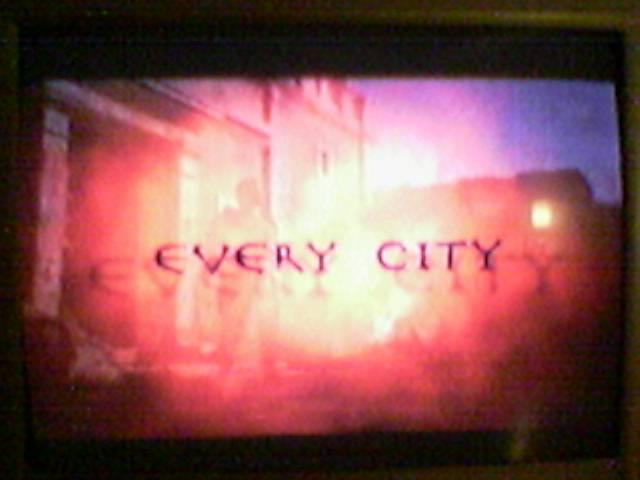
Remember that stencil job I literally stepped in yesterday? It was a fake; guerrilla marketing, and a half-hearted example at that. Look what aired on a break last night (it aired just about two hours after I posted this):


Who's weak attempt at guerrilla marketing was this?
Three letters...


Fine, HBO. The joke's on me; I inadvertently promoted your new show. Gosh, you really got me on that one! Thanks for making me feel stupid, I guess. To show you my gratitude, I'm going to make a point of not watching your new show. Ever.

I'll even go a little further here, because I've known you a while and recently noticed some erratic behavior of yours. Are you feeling okay? I think you're trying too hard to cover up your dirty network secret: you don't appear to be number-one anymore, and you obviously want this new show to be a buzz-laden hit.

HBO's ratings are currently down something like 18%; an empire fallen, the network doesn't have a single show in the top ten. Kinda makes this poor attempt at "graffiti" seem a bit desperate, doesn't it? The Romans didn't have spraypaint; graffiti doesn't make much sense as a tactic for promoting the show.

This pandering to "buzz" is likely to continue until the show airs in the next two weeks, and might well become a new bad habit at the cable network. I personally think it's risky for the Home Box Office to be so determined to take this expensive new show and shove it down our throats.

Up your ass with luxury.

Various sources are reporting that we may soon witness a rise in popularity of luxury toilet paper.

Why would I want to willingly associate the unattainable idea of luxury with the soiled, tangible reality of fecal matter? Luxury = shit? Well, okay, if you luxurious brands insist... I'll just think of you all as crap from now on. (I'll keep favoring the "secret" brands who don't make me pay to be a walking billboard.)

Could a "high-end meets rear-end" trend actually signal the decline of luxury brands, or just a lowering of standards for what are considered luxury goods?

Either way, it appears that luxury (as we once knew it) is ultimately headed down the drain... probably for the best.

16.8.05

EVERY CITY HAS ITS SECRETS

EVERY CITY HAS ITS SECRETS (1 of 2)

They were all curiously close together, as if the stencil-er worked within an arbitrary ten-foot radius... no less than five duplicates of this stencil, strewn on the ground along the edge of the garage, on the alley that runs behind the south side of Chicago Avenue, where it meets the Noble Street sidewalk. I wish my cameraphone was able to capture the whole scene in one shot.

Oddly enough, if you stood in the center of the stencils and looked up, you'd see a big sign advertising the crappy company that manages my apartment building. (I say "crappy" because it's nicer than saying "slumlord".) I know what some of you are thinking, but I didn't set this up. Honest. If I wanted to be mean, I'd have deliberately posted a photo of the sign, too.

I told myself I wasn't going to rail on graffiti for a while (having the building management mention conveniently gives me an alternate bad guy in this story), and I normally don't photograph things people paint on the sidewalk, but...

EVERY CITY HAS ITS SECRETS (2 of 2)

when I found the stencil laying on the ground less than one block away, I knew I'd need photos to explain this chance happening as a sort of "compound coincidence"... plus, I knew this presented a new secret for the city: what I did with the stencil after I picked it up and walked away with it.

3.8.05

Old & busted: BRANDS, New hotness: MEMES?

Adliterate's Meme Doctors post raises an interesting point. It cites the weakness of brand as a concept as reason to claim that memes are better than brands. But the weakness of the "brand" concept is no fault of the language, but of complacent and unimaginative agencies (and their interpretations). A brand is made entirely of memes; in other words, a brand is a memeplex.

The difference is only semantic. If you're not conscious of memes (whether you call them by name or not) when building a brand, you're simply not a good brand-builder. This doesn't make memes "better than" brands per se. Adliterate's stance is too much like saying molecules are better than cells, cells are better than organs, or organs are better than systems - it doesn't quite make sense, because you're really only talking about semantic differences in what makes a basic unit. Call it "brand building", "meme doctoring" or "cultural engineering"; I think it's all the same thing.

23.6.05

More Irresponsible Commentary


So I'm sure came off grumpy in the last post about ill-conceived street art... but here's another reason why the street artists need a good calling-out.

Tats Cru used a toxic, perhaps even petroleum-based spraypaint when they tagged this Hummer ad, presumably to add a tone of environmental responsibility. And they re-branded it with their own branding, which isn't much nobler than what Hummer did in the first place. One could argue that it's actually worse, since Hummer paid to place the ad and Tats Cru played the role of the hater.

If it were only about the environment and opposition to gas-guzzling, there'd be no reason for Tats Cru to brand the vandalism; instead, they're just looking for legitimate work for themselves... Tats Cru is already in league with coroporate graffiti. Consider the projects they've already done for soft drinks, hard liquor and malt liquor.

Or was Tats Cru simply paid by Hummer to vandalize their own ad?

16.6.05

Traffic alone does not a meme make.

But if you want to be successful in "contagious media", it appears that you’ll still need the help of meta-sites like Slashdot, Metafilter and Fark. This, at least, is a determination made by Mark Glasser on the heels of the Contagious Media Showdown.

While some are quick to classify “most popular websites” as memes, I would argue that these are not necessarily memes just because they are "viral" in the sense marketers use (that is, getting a lot of traffic). Truth be told, “viral” simply means that your message is talked about, or replicated, outside of the confines of your media buy; all truly “good” marketing is already viral, whether online or off, but getting internet traffic does not necessarily mean that you have a meme.

A meme has to have the right mix of fidelity, fecundity and longevity. Obvioulsy, digital media do a lot to preserve the fidelity of an idea. And longevity is why books haven't gone anywhere (your email, however, may not provide the best longevity... and your IM is terrible at providing an idea with longevity). But fecundity can be more tricky; it's not mere eyeballs you get on your site, it's how much your message sticks to existing ideas in the brains behind those eyeballs, and how likely those brains are to replicate the message. Successful memes are more culturally (or sub-culturally) relevant than a page-view; this is why they "stick" to ideas your brain is already carrying.

Here's an example of what I mean when I say traffic is not a true measure of a meme: Of all the web sites you've seen or forwarded to someone else, how many of them do you actually remember - without checking your Sent folder or your Bookmarks? Why?